
A rollout shelf, divided drawer or pull-out waste bin changes how an existing cabinet works. It can be a focused project when the boxes are sound and the kitchen layout suits you. Decide what should become easier to find, lift or put away.
Photograph the cabinet with its door fully open, then include a close view of the hinges and anything that projects into the interior. Rough measurements help start a retrofit discussion. The installer still needs to verify the opening, mounting surfaces and selected product before you buy a mechanism.
Choose storage around what goes inside
Empty the problem cabinet and group the items you actually use. A stockpot, cereal box and stack of baking sheets need different support and clearance. Measure the tallest item with its lid or handle in place. Notice how often each item comes out, too; a slow cooker used monthly does not need the same convenient position as a breakfast bowl.
Pick one clear goal for each cabinet. That could mean reaching the back without kneeling, keeping lids upright or separating recycling from trash. An organizer takes up room of its own, so better access can come with less space for bulky objects. A simple adjustable shelf sometimes remains the better choice.
Measure the working opening, not the door front
The width printed on a cabinet plan does not tell you which organizer fits. A provider needs the clear opening, usable depth and height, plus the space occupied by hinges, a face frame or a center stile. The door must open far enough for the moving tray and its contents to pass.
Mounting matters as much as the opening. Loose joints, damaged bottoms or weak attachment areas need assessment before adding moving storage. The selected mechanism's instructions should govern its mounting and capacity; do not transfer a load rating from a similar-looking model.
- Record the narrowest clear width with the door open, including hinge intrusions.
- Check usable depth for pipes, outlets, rear rails and anything stored behind the mechanism.
- Measure vertical clearance above the tray, including handles and tall packages.
- Test the path outside the cabinet against adjacent handles, appliances and walking space.
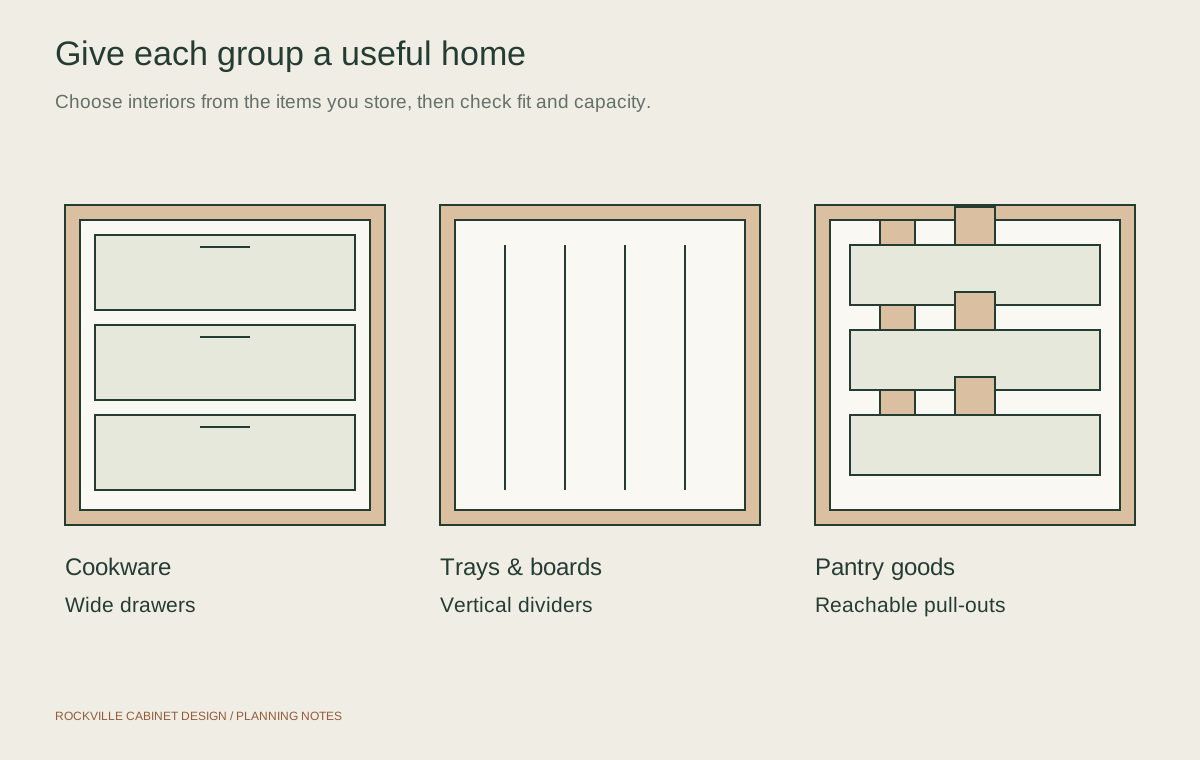
Bring pantry food and cookware forward
Pantry rollouts at useful heights
Individual rollouts can make deep pantry shelves easier to inspect. Their spacing should suit the food you buy: tall bottles on one level, shorter cans on another. Leave enough room to lift an item out without scraping the shelf above. A tall unit that moves several baskets together needs a different clearance and mounting assessment from separate trays.
Pots, lids and awkward handles
For a cookware cabinet, place the widest pan on a proposed tray footprint before selecting it. Long handles can catch the door even when the pan body fits. Lid dividers may help, but they also occupy width. Confirm the selected hardware's capacity for the intended contents and agree where heavier pieces will sit.
Stop utensils shifting and bins blocking the room
Drawer dividers work best when they reflect your utensils rather than a symmetrical grid. A long compartment for a rolling pin may be more useful than several small squares. Measure the drawer's inside dimensions, check clearance when closing it and consider removable parts that let you clean crumbs from the corners.
Waste and recycling pull-outs need room for the containers, frame and any lids. Under a sink, a drain or disposal can rule out an otherwise suitable unit. Consider where you stand to scrape a plate: an extended bin should not trap you between the dishwasher and island. Decide whether the existing hinged door stays or a compatible door-mounted arrangement forms part of the work.
Make a corner decision from a full movement check
A rotating shelf and a mechanism that swings then pulls outward solve different corner problems. Neither fits every blind corner. The opening position, interior shape and neighboring door or drawer determine which movements are possible.
Ask to see the mechanism's complete travel on the proposed plan. Where will its shelves sit when extended, and can you remove the largest mixing bowl? Some systems improve visibility while sacrificing usable shelf area. For occasional roasting pans, retaining an open shelf may be a sensible tradeoff.
Agree what changes inside the existing cabinet
A useful proposal identifies each organizer, its cabinet location and the required preparation. It should explain shelf removal, blocking or mounting work, door adjustments and disposal of removed parts. If a center stile or structural component appears to obstruct installation, have the provider assess it before promising that it can be removed.
Before signing off on the work, try each organizer with the items it will hold. Check for rubbing, door conflicts and accessible cleaning space. Keep the product identification and care instructions. Photos of the open cabinet, rough measurements and a short list of troublesome items are a practical starting point for discussing the project.
A pantry that is easier to unpack

The starting point
A tall pantry cabinet has deep fixed shelves. Food boxes crowd the front while cans disappear at the back. The cabinet box and doors are sound, and the household wants to keep the existing kitchen.
The proposed work
After checking the clear opening, hinge positions and mounting surfaces, a provider replaces suitable lower fixed shelves with individually spaced rollouts. The plan leaves taller clearance for cereal boxes and separates shorter pantry items.
The result to plan for
The same pantry cabinet keeps its exterior doors and cabinet box. Its contents can move forward for inspection. The countertop, surrounding cabinets and walls stay unchanged.
The improvement comes from reaching the existing storage more easily.
Questions about cabinet storage organizers
Can pull-out shelves go in my existing cabinets?
Often, if the box is sound and a suitable mechanism fits the clear opening, interior and mounting surfaces. Hinges and center stiles can limit access. A provider should verify the actual cabinet before products are ordered.
Will organizers increase my cabinet capacity?
They can improve access and separation, but the tray, slides and frame consume space. Compare usable dimensions with your actual items. Being able to reach everything may matter more than fitting one additional stack.
Can I add soft-close to a pull-out?
That depends on the chosen hardware. Soft-close is a specific mechanism feature, and an existing slide may need replacement rather than an add-on. Confirm compatibility and the complete proposed hardware before installation.
Should I replace a sticking drawer before adding a divider?
Have the sticking assessed first. Alignment, worn slides or a damaged drawer box can affect operation. A divider organizes the contents; it will not correct a mechanical problem. Repair may be sufficient without replacing the whole drawer.