
For a Rockville cabinet project, replacement, refacing and refinishing solve different problems. Replacement changes the cabinet boxes. Refacing keeps suitable boxes while changing fronts and related visible surfaces. Painting or clear refinishing works on the existing surfaces and door profiles. Hardware and storage improvements can be separate parts of any of those scopes.
For an assessment, gather photographs of the room and close-ups of the troublesome areas, including inside the sink cabinet. Identify what you hope to keep and what you want to change. That gives the provider specific conditions to inspect before recommending a finish treatment, new fronts or new boxes.
Look inside before choosing a new color
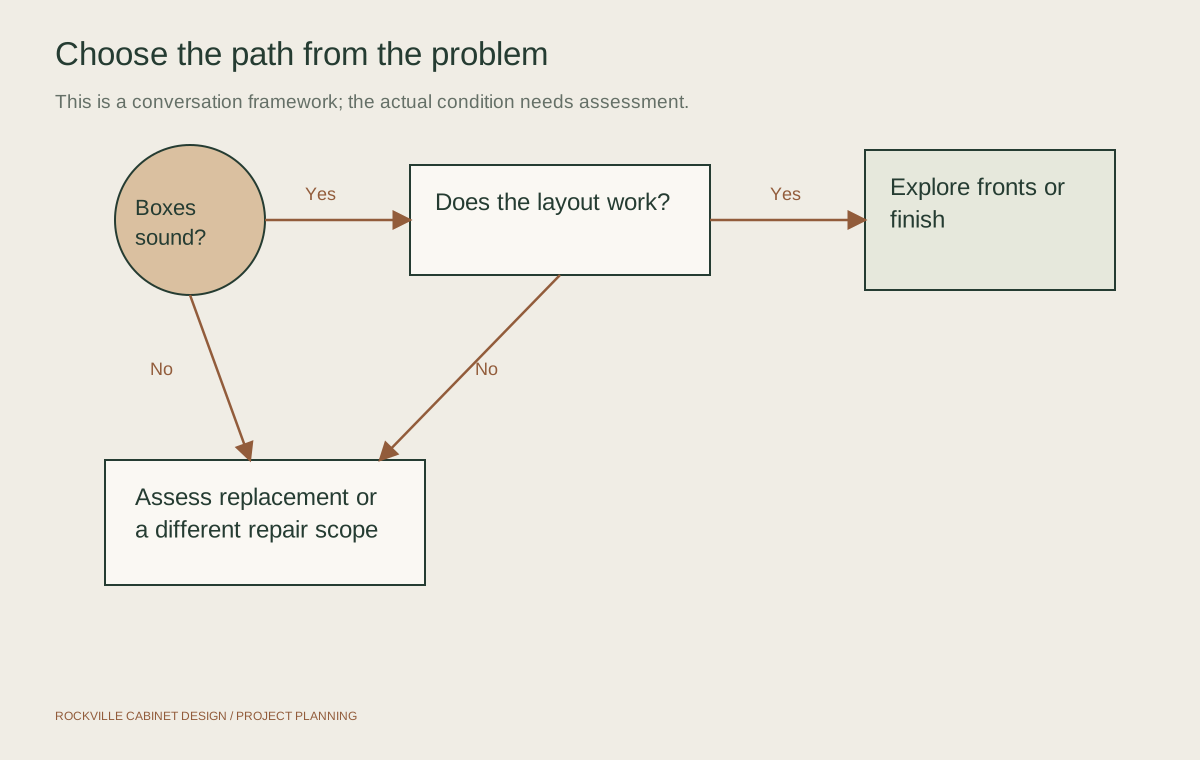
Open the doors and empty the cabinet that causes the most trouble. Look for a swollen bottom, a loose joint, a sagging shelf or a hinge pulling out of its mounting point. A worn finish and a weakened cabinet are different findings. Active moisture needs attention before any cosmetic work is planned.
Then test the room. Can you open the dishwasher and adjacent drawers? Is the refrigerator easy to reach? Does the corner cabinet store anything you actually use? Write down which problems come from the cabinet interior and which come from its position. A pull-out can improve access inside a suitable box; it cannot move a poorly placed cabinet.
- Condition: are the boxes sound, dry and securely mounted?
- Layout: are the cabinet and appliance positions worth keeping?
- Appearance: do you want another finish, a different door profile or both?
- Function: are hinges, drawers or interior storage the main frustration?
What each approach changes
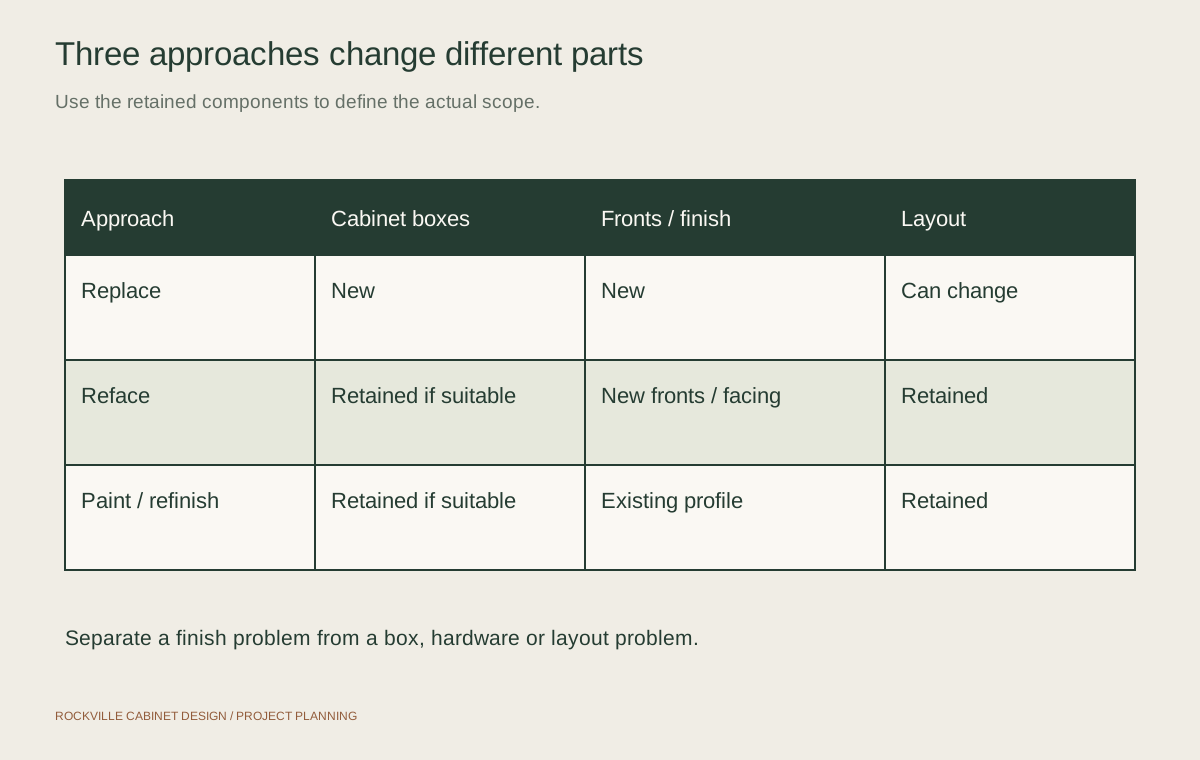
Ask which parts each proposal keeps and which it replaces. A refacing proposal may include new hinges and drawer fronts while retaining the existing drawer boxes. A painting proposal may exclude interiors. Ask for the retained and replaced parts to be identified so you know what the finished kitchen will contain.
| Decision | Replace | Reface | Paint or refinish |
|---|---|---|---|
| Cabinet boxes | New boxes | Retain suitable boxes | Retain existing boxes |
| Room layout | Can change with a coordinated plan | Generally retained | Retained |
| Doors and drawer fronts | Selected as part of the new order | New fronts within the agreed system | Existing profiles retained |
| Visible finish | New selected finish | New fronts and matching exposed facing | Prepared and recoated or refinished |
| Hardware and storage | Specified with the cabinet order | Confirm what is new and what stays | Separate repair or accessory scope |
Replace the boxes when condition or layout calls for it
New boxes let you reconsider cabinet widths, drawer arrangements, appliance openings and tall storage. That flexibility matters when the existing arrangement is the source of the problem. Replacing a damaged sink base may also raise questions about adjoining cabinets, the countertop and access to plumbing.
The wider scope needs planning. Check who handles removal, wall repairs, disposal, installation and connected trades. A new cabinet layout can affect the floor exposed beneath it and the edges of the backsplash. Establish those connections before treating the cabinet order as a simple exchange.
Refacing suits a useful layout with suitable boxes
Refacing is worth assessing when the cabinet structure and room arrangement work, but the fronts no longer suit the kitchen. New doors can change the profile as well as the finish. The exposed frame edges, end panels, fillers and trim need a coordinated treatment so the new fronts belong with the retained cabinetry.
Look beyond a sample door. Review how the selected facing material handles corners, joints and visible ends. Confirm the hinge system and the condition of the mounting areas. Refacing does not repair hidden moisture damage or make a narrow cabinet wider. Adding organizers or replacing a drawer box should appear as an explicit part of the proposal.
Keep the door profile when the finish is the problem
Painting changes the visible color while keeping the existing door shape. Clear refinishing aims for a wood appearance, but the possible result depends on the material, previous coating and condition. A requested stain color may not be achievable evenly on every existing surface. Review a prepared sample rather than relying on a color chip alone.
Preparation matters around handles, cooking areas and worn edges. The provider needs to identify the substrate and existing coating, then specify a compatible process. Ask how doors and hardware will be handled, which surfaces are included and what care the coating requires during curing.
A new finish will not remove a raised panel or straighten a damaged door. If you want a slab front in place of a traditional profile, discuss new fronts or replacement instead. A sticking drawer deserves its own diagnosis even when the rest of the project is cosmetic.
Combining old and new cabinetry
You may want to keep a sound cabinet run, replace one troublesome unit and update the fronts across the room. That approach needs a closer check of door proportions, finish matching and cabinet height. Combining parts from different sources can leave details that are difficult to reconcile after ordering.
Keeping the countertops is another separate decision. Refacing and finishing often leave their supporting boxes in place, but protection and sink access still need agreement. Replacing supporting cabinets beneath an existing surface requires a feasibility and support review before removal. A retained countertop also fixes important dimensions that the new work must respect.
Take room photographs, close-ups of damage and a short list of what you want to retain to the initial discussion. Ask the provider to recommend a path based on those conditions. Compare the resulting scope, including unresolved items, rather than assuming the least disruptive label will produce the best result.
Questions about replace, reface or refinish
Is refacing always cheaper than replacing cabinets?
No universal comparison covers every kitchen. New fronts, facing, repairs, drawer work and labor all affect a refacing proposal. Compare it with a replacement proposal covering the cabinet quality and installation work you would actually choose. The totals need matching inclusions to be useful.
Can I add soft-close hardware without replacing the cabinets?
There may be compatible options, but identify the existing hinge or drawer system first. Mounting locations, clearances and the condition of the cabinet material matter. A soft-close attachment cannot correct a damaged mounting point or a drawer that does not fit properly.
Will painting hide peeling laminate or water damage?
A coating does not restore a weakened cabinet or secure a failing surface. Have the damage assessed and its cause addressed. The practical answer may be a repair, new fronts or replacement rather than painting over the affected area.
Should I choose the cabinet approach before the countertop?
Decide what happens to the cabinet boxes and layout before committing to a new surface. Cabinet dimensions and readiness affect templating and support. If you want to retain an existing top, have that constraint assessed early enough to influence the cabinet plan.