
Rockville's planning chapter for Twinbrook and Twinbrook Forest traces the area's postwar development and describes a mix of detached homes, townhomes and apartments. That history gives context, but it cannot tell you the age or condition of a particular kitchen. Your cabinets may be original, partly updated or entirely replaced.
Start with photographs of the room and the insides of the cabinets. Identify the daily frustration: stacked pans, a crowded food shelf, an awkward corner or a door that catches. A close view of the opening and hardware can help distinguish a fitting problem from a cabinet that needs replacing.
Keep the footprint when it earns its place
A layout can look dated and still put the sink, range and refrigerator in sensible positions. If movement through the room works, new cabinet boxes or selected storage changes may address the problem without moving those anchors. Test the layout with the dishwasher open and someone standing at the range, rather than judging it from an empty-room photograph.
If an appliance blocks the only comfortable route, replacing doors will not solve it. Bring that problem into a kitchen design discussion before ordering cabinets. Decide which changes improve daily use enough to justify their connected work.
Look inside before adding more cabinets
Deep shelves can hold a lot while making the things at the back difficult to retrieve. Group your cookware, food and dishes by where you use them. Pots near the cooking area may suit drawers; trays and boards may need vertical slots. Frequently used food should not depend on climbing to the highest shelf.
A pull-out can be worth investigating when the existing cabinet is sound. Its fit depends on the clear opening, hinges, internal obstructions and usable depth. If the cabinet itself is failing or the opening is poorly placed, compare replacement instead. Our storage guide takes that assessment further.
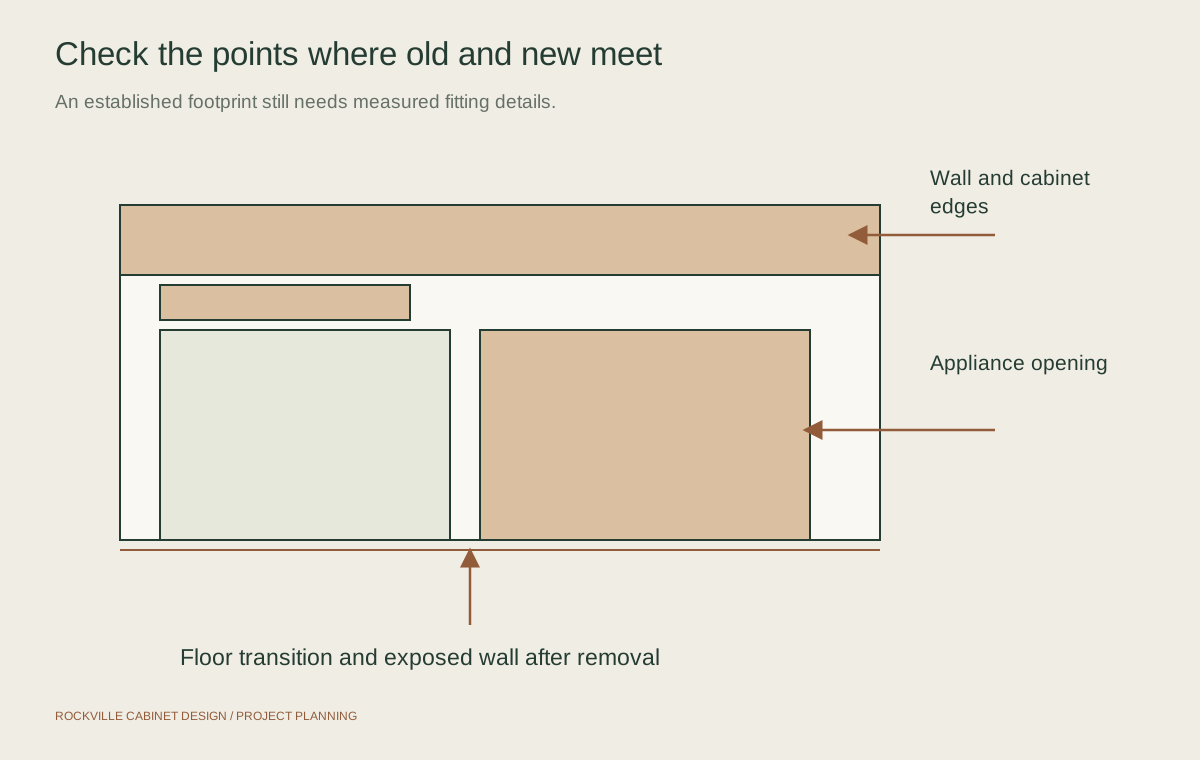
Check where the old kitchen meets the new one
Measure the actual appliance models and the room openings. A replacement refrigerator can need a different surround even when its advertised width looks similar. Cabinet fillers and finished ends deserve a place on the drawing because they affect both appearance and door movement.
Ask what is known about the floor beneath the current base cabinets and what can only be checked after removal. A different cabinet footprint may expose an unfinished edge. Keeping the countertop raises a separate support and reuse question; do not assume a surface can simply wait in place while its supporting boxes are removed.
Make room for delivery and removal
The city's Twinbrook planning chapter identifies parking constraints in parts of the area. For your property, establish a suitable unloading location and a route that does not block access for neighbors. Check steps, doors and tight turns against the largest cabinet being delivered.
Choose a dry staging area before delivery. Agree where the old cabinets and packaging will go, who removes them and how occupied rooms will be protected. In a shared building, ask management about its arrangements. These details belong in the plan before boxes arrive, not after a tall pantry cabinet is at the door.
Bring a short, useful project brief
Share the property address, room photographs, appliance information and the two changes you most want to make. Identify anything that must stay, such as the floor, sink location or countertop. Rough measurements help start the conversation; final ordering needs the responsible provider's required verification.
Check jurisdiction using the City of Rockville's address resources. A Rockville mailing address alone is not proof of city limits. If the work also affects walls or utilities, confirm the applicable requirements with the relevant authority. Call (877) 702-1610 to discuss your cabinet scope and confirm provider availability for the address.

Questions about twinbrook
Can I improve a Twinbrook kitchen without moving the sink?
That is a useful option to assess when the existing layout works. Drawers, pantry interiors or replacement cabinets in the current footprint may improve storage. Measurements and cabinet condition determine what fits; keeping the sink does not settle every connected plumbing or countertop detail.
Do all Twinbrook homes need custom cabinets?
No. The neighborhood's history does not establish what a particular room needs. Compare standard sizes and available modifications against the measured plan. Custom dimensions may solve a difficult fit, but cabinet construction, finish and installation still need their own review.
Should I keep the existing cabinets and replace their fronts?
Consider refacing when the boxes are suitable and the arrangement serves you well. Damage, weak mounting or a layout you want to change can point toward a different scope. Have the retained parts assessed before choosing new fronts or a finish.