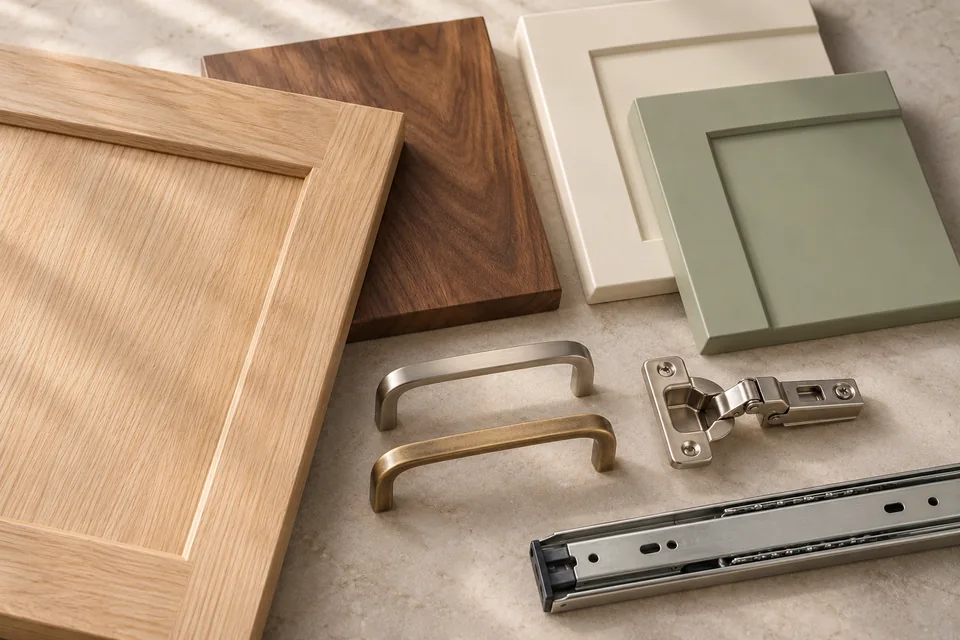
A handsome door tells you little about the cabinet behind it. Ask for a sample cabinet or a clear construction drawing, then identify which parts the specification describes. A plywood box with an engineered door is a different assembly from a cabinet advertised with a solid-wood door and unspecified box material.
Take notes while you have the sample open. Record the collection name and any upgraded components on display, then compare those notes with the quoted specification. The business supplying the cabinets should be able to explain any differences and provide the relevant care and warranty information.
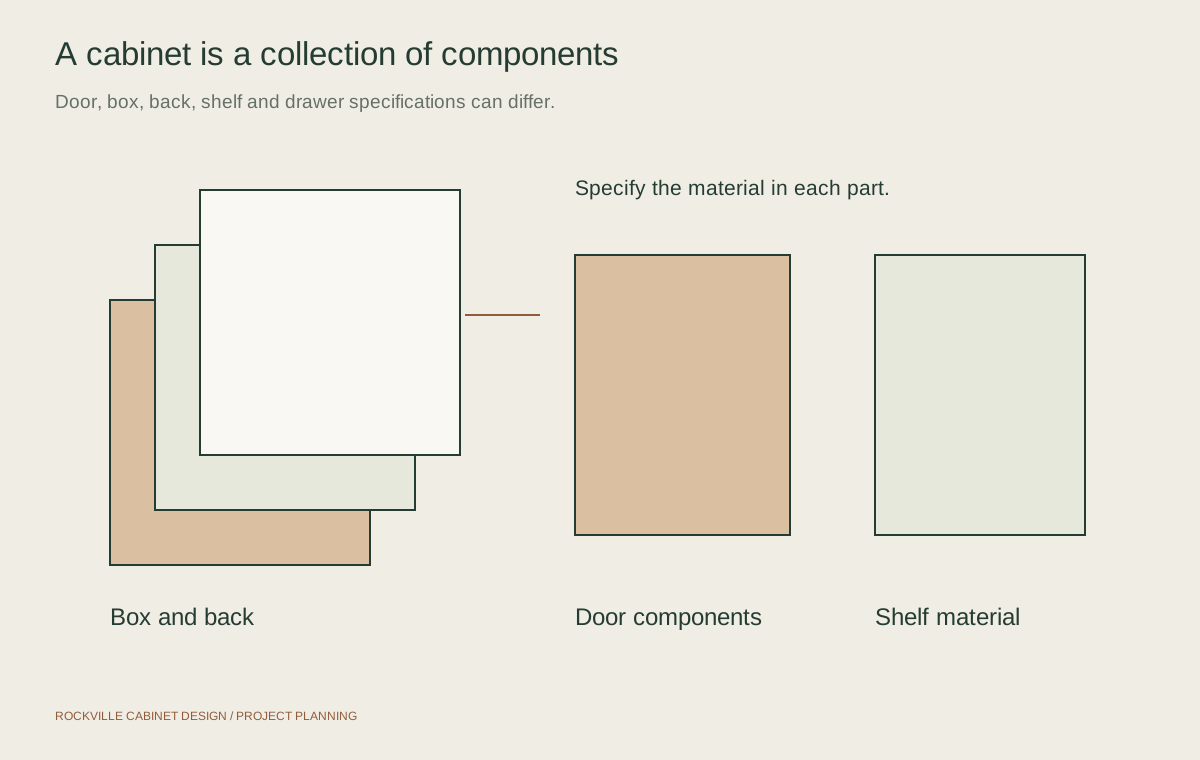
Identify the material in each part
Cabinet construction can combine several materials. Sides, backs, shelves, door frames, center panels and drawer bottoms need separate descriptions. The phrase wood cabinets does not settle those details. Ask for the specification for the exact collection and option being quoted, since a display may show an upgrade.
Plywood is made from bonded wood layers. Medium-density fiberboard, usually shortened to MDF, uses wood fibers; particleboard uses bonded wood particles. These names describe material categories, not a complete quality rating. Panel thickness, surface protection, connections, edge treatment and the way the cabinet is supported also matter.
Engineered materials can provide a consistent surface for a painted or laminated component. Natural wood brings grain and variation that may be desirable in a stained door. Decide what appearance you want, then examine how the proposed material and finish are used together.
| Part to identify | Question to ask |
|---|---|
| Cabinet sides and bottom | What material and thickness are specified for this collection? |
| Back and attachment areas | How does this cabinet attach to the wall under its installation instructions? |
| Shelves | What span, support and stated loading guidance apply? |
| Door and drawer fronts | Which parts are wood, veneer or engineered material? |
| Exposed ends | Is the visible side finished to match, or does it need a separate panel? |
Look closely at edges and wet areas
A material name cannot make a cabinet waterproof. Around a sink or dishwasher, examine exposed edges, plumbing penetrations and the proposed protection of the cabinet interior. Ask how cut edges are treated and which care instructions apply. A small leak needs attention regardless of the box material.
For an existing kitchen, inspect beneath the sink before choosing a finish-only update. Swollen panels, a soft base or loose attachment points raise a different question from a scratched door. Covering the visible surface will not explain or correct the underlying condition. Have the affected area assessed before deciding what to retain.
Separate the box style from the door position
A face-frame cabinet has a frame across the front of the box. In a frameless cabinet, the box edges form the front opening and hardware attaches accordingly. Compare the actual opening and hardware arrangement rather than assuming one term always means more usable storage.
Overlay and inset describe the relationship between the fronts and the cabinet opening or frame. An overlay front covers part of the face; an inset front sits within its opening. Ask to see the intended door position and reveal lines on a sample. The installation and adjustment need to suit that construction.
Shaker, slab and raised panel describe a door's appearance. They do not tell you whether the box is framed or frameless, or which material is inside it. Keep those choices separate when reading a proposal so a change in door style does not obscure another specification change.
Try the drawer, then read its specification
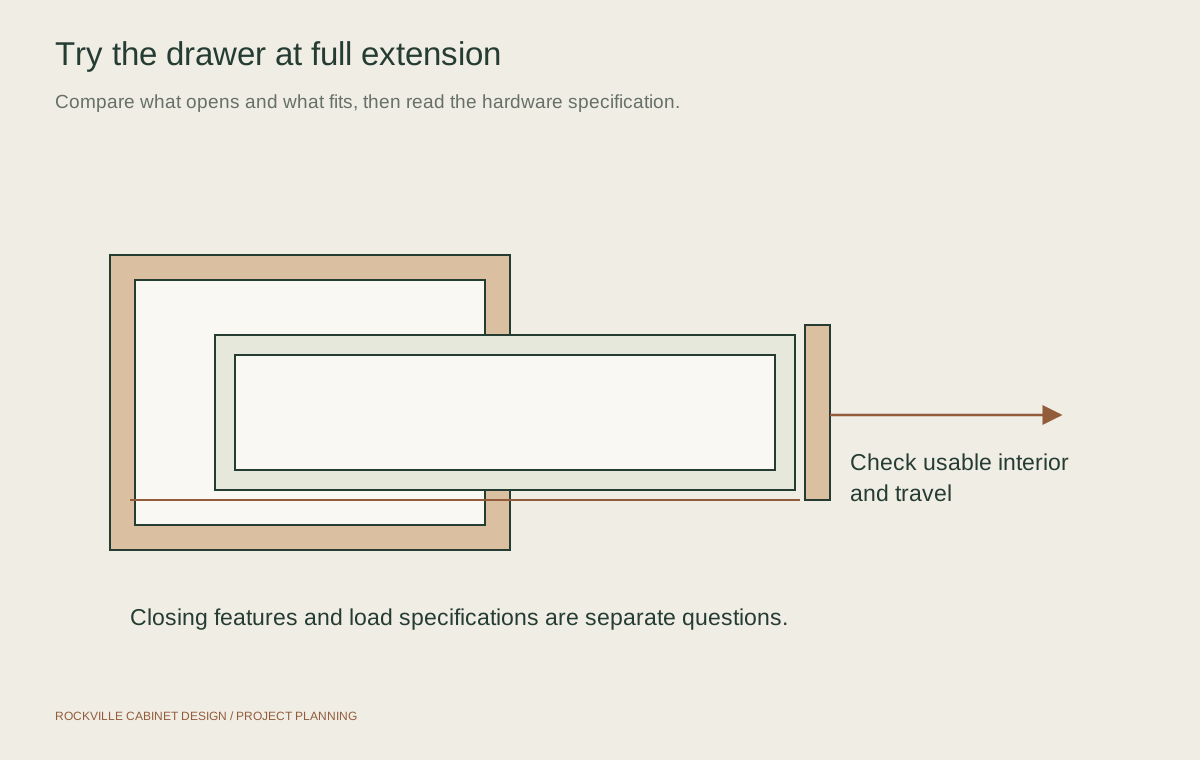
Pull a display drawer out slowly and look underneath and along the sides. Identify the drawer-box material, corner joints, bottom attachment and slide model. A visible dovetail is one construction detail; it does not establish the strength or useful capacity of the whole assembly.
Check how far the drawer opens and how easily the back can be reached. Full-extension movement and soft closing answer different needs. Ask which features are included, what the manufacturer states about loading and how a drawer is removed for cleaning or service. Do not transfer a display's hardware specification to another collection without confirmation.
Hinges deserve the same attention. Open a door beside a wall or neighboring cabinet to understand the usable movement. Ask about adjustment, replacement parts and the mounting surface. An organizer retrofit needs these details too, because the clear opening and hinge movement can limit what fits.
Approve a representative finish sample
View the selected finish with the countertop, floor and nearby lighting. For natural wood, ask what variation to expect across doors and panels. For paint, look at texture, sheen and the details around joints. A small color chip cannot show every feature of a completed cabinet front.
Confirm the care instructions before ordering. Cleaning products, heat and moisture exposure need to be considered under the product's guidance. Keep the exact finish name and collection information with the order so a later repair request starts with an identifiable product.
Make sure the order matches the sample
Keep the final cabinet schedule, selected construction options and finish approval together. Note which cabinets receive finished ends, specialty interiors or different hardware. A drawer upgrade discussed in the showroom needs to appear in the order if you expect it in the kitchen.
If a certification or test claim matters to your decision, request the current supporting documentation and check which product it covers. A logo on a brochure is not a substitute for identifying the proposed collection. Separate product coverage from installation workmanship terms, and keep the responsible business's contact information.
- Ask to see the construction specification for the exact quoted collection.
- Record drawer and hinge options, including upgrades shown on the sample.
- Identify finished panels, fillers and exposed edges in the cabinet schedule.
- Retain written product care and warranty terms with the approved order.
Questions about cabinet construction
Are plywood cabinet boxes always better?
Plywood alone does not answer that question. Compare the complete box, connections, backing, shelves, edges and installation requirements. Ask what the specified construction offers for your intended use rather than treating one material name as a universal grade.
Does a solid-wood door mean the whole cabinet is solid wood?
No. Door frames, center panels, cabinet boxes and drawer parts can use different materials. Request a component-by-component specification. Also confirm what the supplier means by solid wood in the particular description you are reading.
Is frameless the same as a slab door?
No. Frameless describes the cabinet box construction, while slab describes the flat door profile. A door style and its position on the cabinet are separate choices. Review the sample and drawing for the actual combination offered.
Can I add soft-close hardware later?
Sometimes, but compatibility needs checking. Identify the existing hinges or slides, mounting arrangement, drawer dimensions and available clearance. A compatible upgrade may be possible; worn mounting points or unavailable parts may require a different repair plan.